
How Bright Drawn Mild Steel & Black Steel Differ
23 December 2022
Black Steel
Black steel is a form of high-temperature rolled steel (above the recrystallisation temperature of 920°C). Easily identifiable by its dark blue and oily surface, black steel is a unique form of carbon steel, excellent for specific uses. When steel is above its recrystallisation temperature, it’s able to be formed and shaped much more easily. Ultimately, this means that the steel can be fabricated at much larger sizes.
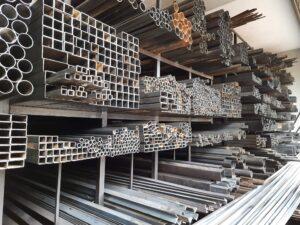
Black steel is created through a milling process involving high-temperature rolling. This simple process causes black steel to be a cheaper form of mass-produced steel. Since black steel does not need to be reheated and cooled for strength and hardness, it can be manufactured without delays and therefore has a much lower cost. However, this comes with a drawback in terms of its compliance to strict sizing.
Uses of Black Steel
As black steel is much easier to mass produce than other forms of steel, it is typically used when large amounts of steel are needed. Black steel is a hard and less ductile steel with less strict attention to precision in shape and tolerance.
Such examples may frequently include railroad tracks or I-beams since these don’t require exact precision in shape and tolerance. Black steel is also commonplace in long-distance pipelines that are prone to rust and changes to the climate.
Bright Drawn Mild Steel
The difference between bright drawn steel and black steel is that bright drawn steel has had further processing. In order to fabricate bright drawn mild steel, once the steel has reached its recrystallisation temperature, it's further processed in a cold reduction mill, cooling it at room temperature, followed by an annealing process.
Cold drawing effectively produces high-quality steel at a lower cost, with minimal effort. This is a simpler way for steel fabricators to produce steel with higher yield points, increased tensile strength, less surface imperfections, a narrow tolerance range, and an improved surface finish
The end result is steel with higher tolerance and precise dimensions, with a wider range of surface finishes.
Uses of Bright Dawn Steel
Bright drawn mild steel is an excellent choice for any project where tolerances, surface condition, concentricity and straightness are vital factors for success. Because of this, mild steel is widely used as structural steel in the production of beams and columns. This is because mild steel is malleable and not brittle. It’s also effective at conducting electricity, making it prime for welding.
One downside of bright drawn mild steel is that the low carbon content makes it vulnerable to corrosion. Because of this, any steel intended for use in construction or similar industries should be thoroughly coated and finished to prevent damage to the product.
Summary - Black Steel vs Bright Drawn Steel
The key difference between these two types of steel is the brittleness and hardness that black steel has, whilst bright mild steel is less hard and, therefore, much more malleable. This makes mild steel a valuable option in the production of structural steel products such as steel beams, columns and mild steel bars.
Order Steel from Local Steel Suppliers
If you’re looking for high quality steel for a future project, look no further than the expert steel fabricators that Buy A Beam partners with, delivering high-quality steel across the UK.
Buy A Beam’s online shop makes it simple and easy to locate nearby steel fabricators with vast experience in producing steel for a wide range of industrial and commercial uses.