
What is the Difference Between 316 and 304 Stainless Steel?
24 October 2022
When looking at 304 and 316 stainless steel, it can be confusing to understand the differences. However, Buy A Beam is here to help!
Although 304 and 316 stainless steel may not look any different from each other, the differences in their manufacturing processes are huge. Whilst these types of stainless steel are both austenitic, the main difference is that 316 stainless steel contains around 3-4% molybdenum, whilst 304 contains none.
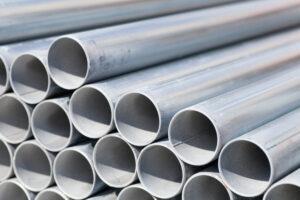
304 vs 316: What Makes Them So Popular?
Because these types of stainless steel are both austenitic, meaning that, amongst other things, they have a high level of chromium and nickel, providing them with a strong resistance to heat, corrosion and abrasion. This gives them the spotless, clean appearance that has made 304 stainless steel the standard for the food and hospitality industry.
How is Stainless Steel Categorised?
There are five categories of stainless steel as organised by their crystalline structure. 304 and 316 stainless steel are both graded as austenitic-grade stainless steel, meaning they’re non-magnetic and can’t be hardened by heat treatment.
Properties of 304 Stainless Steel
| Physical Property | |
|---|---|
| Melting Point: | 1450℃ |
| Density: | 8.00 g/cm^3 |
| Thermal Expansion: | 17.2 x10^-6/K |
| Modulus of Elasticity: | 193 GPa |
| Thermal Conductivity: | 16.2 W/m.K |
| Tensile Strength: | 500-700 Mpa |
| Elongation A50 mm: | 45 Min % |
| Hardness (Brinell): | 215 Max HB |
Applications for 304 Stainless Steel
Because of it’s resistance to corrosion, the medical industry and food industry both commonly use 304 stainless steel as it is able to withstand harsh cleaning chemicals, making it ideal for use in applications where cleanliness is vital.
Properties of 316 Stainless Steel
Whilst 316 stainless steel may look almost identical to 304, the main difference between the two is the use of molybdenum in the composition of 316-grade stainless steel. This molybdenum creates an even greater corrosion resistance. However, this comes at a cost, as 316 stainless steel is more expensive than 304.
| Physical Property | |
|---|---|
| Melting Point: | 1400℃ |
| Density: | 8.00 g/cm^3 |
| Thermal Expansion: | 15.9 x10^-6/K |
| Modulus of Elasticity: | 193 GPa |
| Thermal Conductivity: | 16.3 W/m.K |
| Tensile Strength: | 400-620 Mpa |
| Elongation A50 mm: | 45 Min % |
| Hardness (Brinell): | 149 Max HB |
Applications for 316 Stainless Steel
The increased corrosion resistance of 316 stainless steel makes it ideal for use in marine environments. It is often frequently used in hospitals and medical applications where the added corrosion resistance over 304 is paramount.
Heat Resistance
Heat resistance can be an essential factor to consider when selecting which grade of stainless steel. Both 304 and 316 have excellent heat resistance at low and high temperatures. However, 304 stainless steel can withstand use at slightly higher temperatures than 316 stainless steel.
Pricing Differences
So, why is 316 more expensive than 304 stainless steel? The reason for this is the increased nickel content and the addition of 2% molybdenum. These elements give 316 an edge in corrosion resistance but make it 40% more costly on average.
Which is Better?
When comparing these types of steel, you need to weigh up the pros and cons of both. Whilst 316 has a greater corrosion resistance - the increase in price means it’s only really suited for specialist commercial and industrial applications. 304 stainless steel is adequate for almost all applications where stainless steel is needed, but if you really need that edge, 316 stainless steel is the way to go.
Order Steel Through Buy A Beam
If you’re looking for a local fabricator of structural steel or any other specific steel product, look no further. The Buy A Beam Shop is an industry-leading tool, perfect for helping you find masterful steel fabricators throughout the UK. Our specially made steel calculator can help you find a quote in no time, with easy access to a local steel fabricator through the Buy A Beam Partner Network.