
What are the Uses for Steel Hollow Sections?
17 December 2020
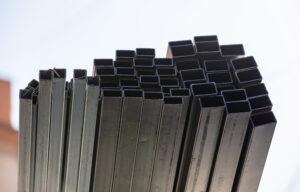
There are hundreds of different variations and types of structural steel. Products can come in a huge range of sizes and shapes, with specific products suiting certain applications in construction and manufacturing.
One of the most popular products is the steel box section, otherwise known as structural steel pipe, tubing or the industry term steel hollow section.
What are Hollow Steel Sections?
These products are pieces of cold-rolled steel that are formed into a hollow, tubular section. They get the names of box section and hollow section due to the fact that at the edges, there is a gaping hollow edge going throughout the whole steel bar.
Steel hollow sections are categorised into three primary shapes. Each of these sections has its own attributes, benefits and specific uses.
The main types of steel tube are:
Before we explore the common uses for these steel sections, it’s important to understand exactly what separates these sections, other than their shape.
What are Hollow Section Sizes?
The exact sizes available will depend on the manufacturer and regional standards. However, some common sizes (Height x Width x Wall thickness in millimetres for rectangular and square sections and Diameter x Wall thickness for circular sections) are provided below:
Rectangular Hollow Section (RHS).
- 50x25x2mm
- 100x50x3mm
- 150x100x4mm
- 200x100x5mm ... and many more.
Square Hollow Section (SHS):
- 20x20x2mm
- 40x40x2.5mm
- 50x50x3mm
- 100x100x5mm ... and so on.
Circular Hollow Section (CHS):
- 21.3x2.3mm (which is common for pipes as well)
- 48.3x3.2mm
- 60.3x3.6mm
- 76.1x3.6mm ... among others.
Remember, these are just common sizes. The range of sizes manufactured can be vast and vary by region, manufacturer, and specific application.
What is Square Hollow Section?
Square hollow section steel (SHS) is a popular type of steel tube which is more of a ‘universal’ tube, in terms of its attributes, structural integrity and appearance.
SHS products feature flat surfaces, which are easy to join and weld and that require very little edge preparation. SHS tubes also feature symmetrical edges, as opposed to rectangular sections with four different edge sizes (with two opposing sides being equal in length).
Square sections provide a great deal of strength, durability and aesthetic value for several applications where all three of these attributes are required.
What is Rectangular Hollow Section?
Rectangular steel sections (RHS) are popular choices for structural, mechanical and building applications. Like SHS, RHS tubes have flat surfaces, meaning they provide convenient structural support while being easy to join, weld and fabricate together.
Due to its rectangular shape, this type of hollow section steel is easy to cut and join to other flat surfaces. Similar to SHS, these products require minimal edge preparation for welding or joining.
What is Circular Hollow Section?
Circular hollow sections (CHS) are what can only be described as conventional-looking steel pipe and tube. These products are used in numerous applications in various industries, from structural to mechanical and building works.
The clean lines, smooth surfaces and lack of any protruding edges make them particularly aesthetically pleasing. But they, like SHS and RHS, are still incredibly strong, durable and reliable.
What can Hollow Sections be Used for?
Hollow steel sections are commonly used in welded steel frames and columns. They’re also regularly used as steel support beams, due to their immense strength.
Particularly with SHS and RHS products, their flat surfaces make them easy to work with during construction projects. Even architects and designers find themselves turning to hollow section structural steel for exposed structures due to how practical and visually appealing they can be.
Common Uses For Hollow Structural Steel
- Scaffolding
- Guardrails
- Fences
- Staircases
- Gates and railings
- Trusses
- Cranes and other machinery
- Furniture
- Hydraulic platforms
- Trusses
- Storage facilities
Steel sections like these are some of the most versatile and efficient products available for mechanical and building applications. Hollow sections often make up some of the most structurally sound and aesthetically impressive structures we know and love today.
They have diverse uses, and by buying steel online via the user-friendly online store, Buy A Beam, you can buy these products directly from local steel suppliers. Many of our suppliers have been fabricating structural steel for generations, who take great pride in achieving specific looks for their steel while ensuring they are completely fit for purpose.
What are Hollow Section Sizes?
Hollow steel sections come in two primary shapes: rectangular (RHS) and circular (CHS). Their sizes range from small profiles, suitable for minor applications, to large diameters used in major infrastructure projects. Industry standards dictate sizes, but common RHS dimensions include 50x20 mm to 400x300 mm, while CHS often ranges from 21.3 mm in diameter to over 500 mm. Custom sizes can also be manufactured to meet specific requirements.
I Beam versus Hollow Section
I beams, characterised by their I-shaped cross-section, are primarily used for heavy-duty applications where bending resistance is crucial. Hollow sections, on the other hand, provide uniform strength along all axes, making them suitable for multi-directional loads.
While I beams excel in centralised load-bearing scenarios, hollow sections offer versatility and aesthetics and can often be a more efficient choice in torsional loading conditions.
What are the Pros and Cons of Hollow Steel Sections?
The advantages of hollow steel sections include their aesthetic appeal, uniform strength, and weight-saving properties. They can also be easily welded, reducing the need for bolted connections.
Disadvantages primarily revolve around their cost, as their manufacturing process can be more expensive. Additionally, the internal hollow space can collect water or debris, which might necessitate additional protection or maintenance measures to prevent corrosion.
How to Buy Steel Online Easily
With Buy A Beam, you can order steel online in just a few short steps. You can order steel products online via our shop, 24 hours a day, 7 days a week.
Once you select a local steel supplier to you to order from, you can browse the range of products you can buy directly. You’ll be quoted instant prices and given a huge list of sizes to choose from. You’ll also have the ability to add processes, flange holes, specify other particular specifications and much more.
No more waiting around! You can buy steel online easily with Buy A Beam, and not have to wait hours for quotes or estimates.
For more information, contact our team today.
Other Steel Bars
Buy A Beam is an online shop that can connect you to a local steel fabrication company to help you find all your steel flat bar needs, as well as numerous other types of steel including:
- Steel tube and pipe
- Angle steel (equal and unequal)
- Universal beams (I beams)
- Universal columns
Buy A Beam lets you buy steel online from trusted, local structural steel fabricators and gives you instant prices. Thanks to the built-in steel calculator tool you can get an instant quote for the exact products you need, with an expected delivery date given to you once the order’s been accepted by the steel supplier.
Visit our online store today and see how we can help you find the steel bars you need. If you have any queries, please contact one of the team directly.