
The History of Steel Building in Cardiff
30 June 2026
Steel and Cardiff have been closely linked for more than a century. Long before the gleaming facades of Cardiff Bay became a symbol of Welsh ambition, the city was producing the material that would quite literally build nations.
Here we tell the fascinating story of Cardiff steel from past to present.
Cardiff's Steel Heritage: From East Moors to the Modern Skyline
At the heart of this story is East Moors Steelworks, once one of the most important steelmaking sites in Wales. Established in 1891 when the Dowlais Iron Works relocated from Merthyr Tydfil to Cardiff for easier access to the docks, East Moors grew into a formidable industrial complex, which dominated the Cardiff skyline for almost a century.
At its peak, the plant was capable of manufacturing half a million tonnes of steel a year. For generations of Cardiff families, it was a way of life. In 1978, thousands of jobs were lost when the East Moors Steelworks ceased production. The closure of the plant was blamed on obsolete equipment not being upgraded, and overseas competitors having cheaper workforces.
The loss was seismic. The newly-named Welsh Development Agency took responsibility for the clearance and site preparation of several hundred acres of land between Splott and the then operational docks. Yet Cardiff's relationship with steel didn't end there. Steel production continued at Allied Steel and Wire, until Spanish firm Celsa Steel UK bought the plant in 2003, maintaining a working steel legacy in the city to this day.
Cardiff Bay's Landmark Buildings Are Where Steel Meets Welsh Identity
Much of Cardiff's structural steel story is told on the waterfront of Cardiff Bay, where two landmark buildings have become internationally recognised symbols of modern Wales.
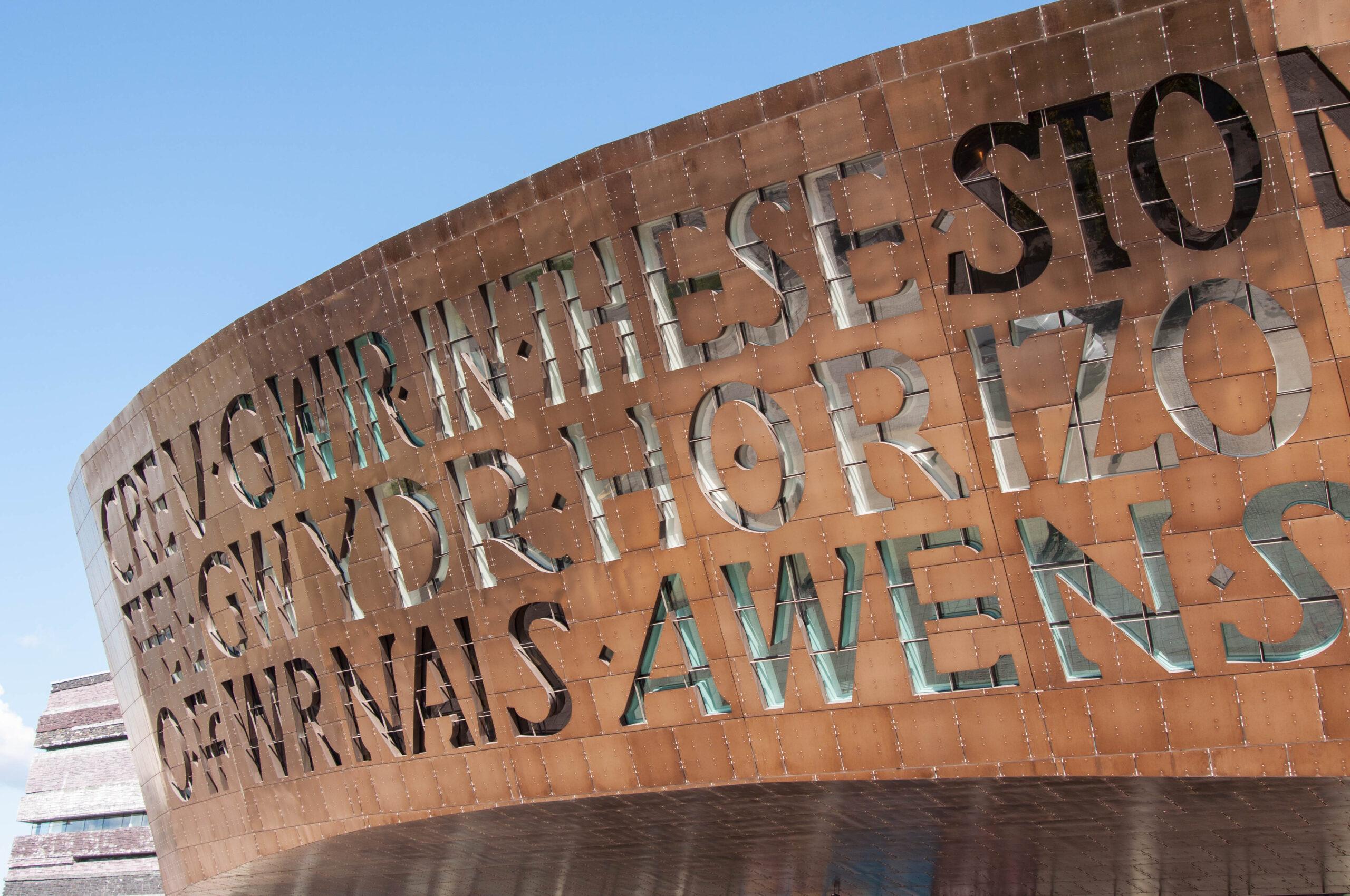
The Wales Millennium Centre, opened in 2004, is one of the boldest architectural statements in the city. Designed by Welsh architect Jonathan Adams, who set out to create something “unmistakably Welsh and internationally recognisable,” the building uses Welsh slate together with glass and steel.
For the exterior, 4,500 tonnes of structural steel was clad in 2,000 tonnes of recycled Welsh slate. The architecture draws inspiration from the natural beauty and industrial heritage of Wales: the sea cliffs and steel industry of South Wales, as well as the slate mines of the north. Using structural steel as its skeleton enabled the building's bold, expressive curves and overarching bronzed shell.
Next door is the Senedd, the home of the Welsh Parliament. Designed by the Richard Rogers Partnership and completed in 2006, it has a glass façade around the entire building, dominated by a steel roof and wood ceiling. The architects described their ambition as creating “a transparent envelope, looking outwards to Cardiff Bay and beyond”, a vision only achievable through the structural possibilities that steel affords.
Together, these two buildings define a distinctly Welsh architectural language that is open, expressive, rooted in local materials, and made possible by structural steel at their core.
Why Cardiff’s Developers Choose Structural Steel
Structural steel’s importance to Cardiff's future is as strong as ever. Sustainability credentials are central to procurement decisions, and here steel excels as one of the most recycled materials in the world.
Design flexibility is equally important. From the sweeping roof of the Wales Millennium Centre to the democratic spaces of the Senedd, steel enables architects to push boundaries. It can be fabricated off-site, reducing programme times and disruption, and it performs reliably across a vast range of building types, from commercial offices and industrial units to public buildings and residential.
Cardiff is a city that is still heavily invested in steel. Its industrial past, its regenerated waterfront, and its growing skyline all showcase what the material can do. For developers, contractors, and designers working across the Welsh capital, structural steel is the smart, future-focused choice.
Wellington House: Cardiff Steel Construction at its Finest
A great example of a modern steel project is Wellington House, a 250-tonne structural steel project right in the heart of Cardiff city centre. The project involved complex, high-quality work, designed and fabricated locally for one of the city's most prominent locations.
The structure presents a genuine engineering challenge, built over an existing building on a busy main road and incorporating impressive 18-metre truss sections. The project required the fabrication of three bespoke steel staircases featuring glass balustrades, along with stainless steel and glass balcony balustrades complete with integrated privacy screens. A fitting showcase of Cardiff-made steel at its finest.
Planning a Steel-Framed Project in Cardiff?
The team at Buy a Beam supplies structural steel across South Wales, offering specialist fabrication and engineering knowledge to projects of every scale.
Buy A Beam provides a fast and simple way to order structural steel online. Our platform allows builders, contractors and DIY customers to quickly source the steel sections they need for construction and renovation projects across Cardiff and Wales.
Our customers across regularly order products such as Steel Beams / RSJs, Box Sections, Steel Channels, Steel Angles, and Flat Bars for a wide range of building and fabrication projects.